The Bridge心桥
A communication platform bridging the emotional gap between college students and their parents through low-pressure interactions.一个通过低压力互动,帮助大学生与父母跨越情感距离的沟通平台。 Try High-Fidelity Prototype体验高保真原型
Role角色
UX Researcher & Designer用户体验研究员与设计师
Methods方法
Jump to Section跳转至章节
00 / Quick Summary快速概览
The Concept项目概念
A communication tool designed for college students and their parents to bridge emotional distance and reduce unintended pressure through "low-friction" check-ins.一款为大学生及其父母设计的沟通工具,通过“低摩擦”的日常问候缩小情感距离,减少无意间产生的压力。
Key Insight核心洞察
Parents and students share the same goal of connection, but mismatched communication styles (advice vs. emotional support) often lead to perceived pressure and silence.父母和学生都有建立联系的共同目标,但不匹配的沟通方式(建议与情感支持)往往会导致压力感和沉默。
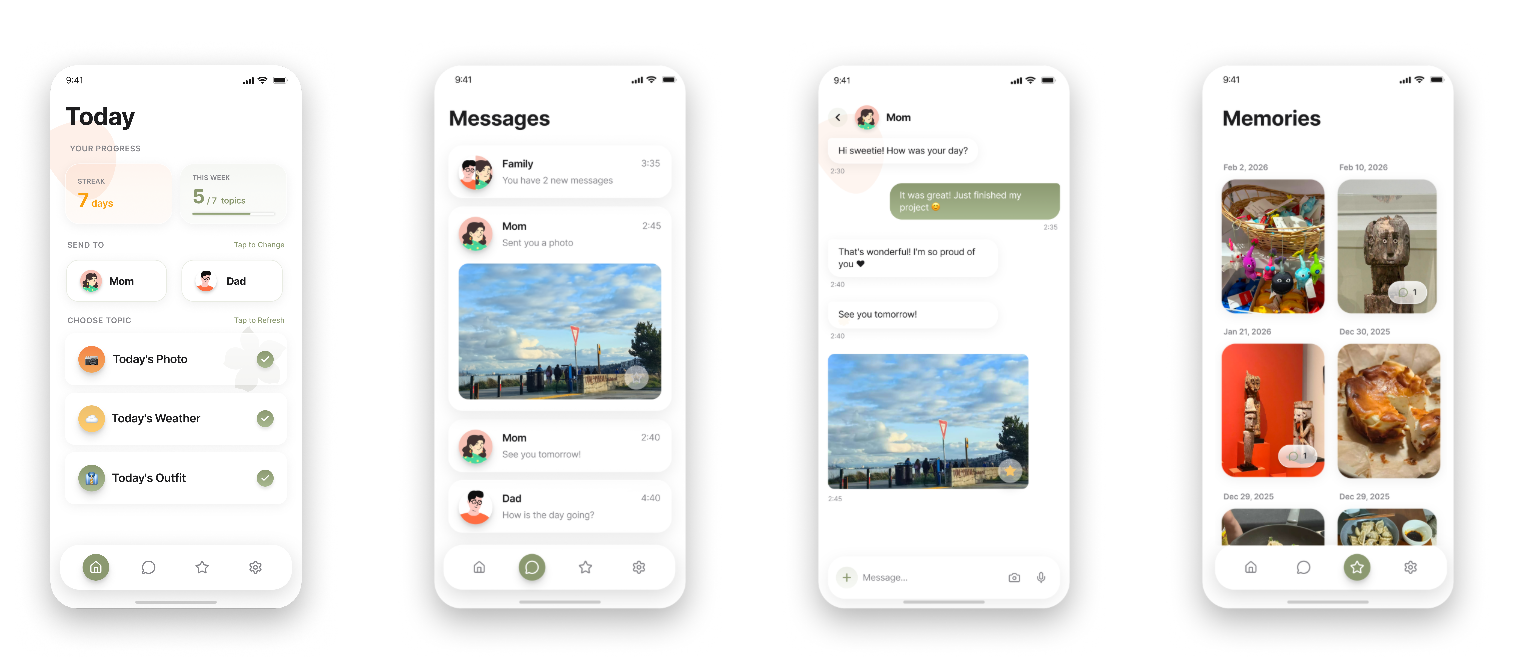
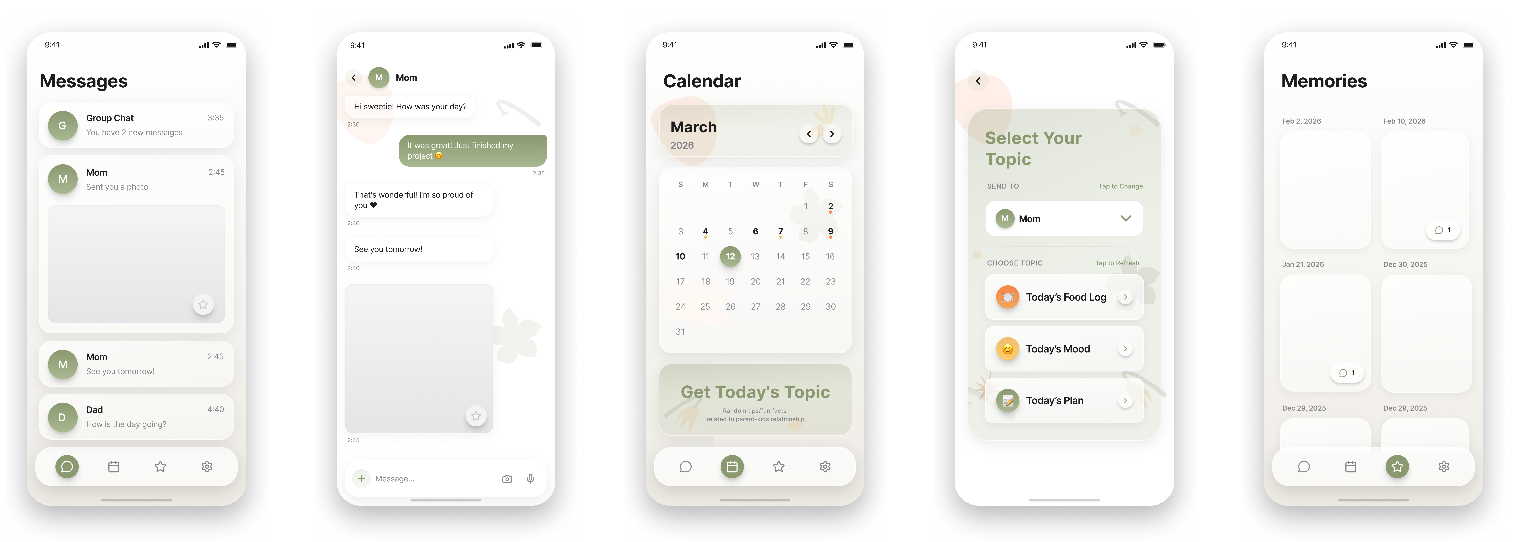
Final High-Fidelity Prototype Display最终高保真原型展示
The high-fidelity prototype represents the culmination of extensive user research and iterative design. It focuses on providing a low-pressure environment for emotional check-ins, utilizing soft color palettes and intuitive navigation patterns.高保真原型凝聚了广泛的用户研究与迭代设计,聚焦于通过柔和的色彩和直观的导航模式,为情感问候营造低压力的环境。
Deep Dive: Process & Strategy深入探讨:流程与策略
+
01 / Problem Statement问题陈述
"How can we help college students and their parents create a peaceful, friendly space to talk and improve the overall family atmosphere?"“我们如何帮助大学生及其父母创造一个平和、友善的对话空间,并改善整体家庭氛围?”
02 / Research Findings研究发现
Respect Gap尊重差距
Parents show respect through financial/academic support; students want to be listened to.父母通过经济或学业支持表达尊重;学生则希望被倾听。
Fear of Initiation发起对话的恐惧
Both sides want to reconnect after conflict but avoid starting conversations due to fear of friction.双方在冲突后都想重新建立联系,却因害怕摩擦而回避开启对话。
Invisible Needs隐形需求
Parents love through advice, students avoid escalation; both keep emotional needs hidden.父母通过建议表达爱意,学生避免冲突升级;双方都隐藏着情感需求。
03 / Target Personas目标用户画像
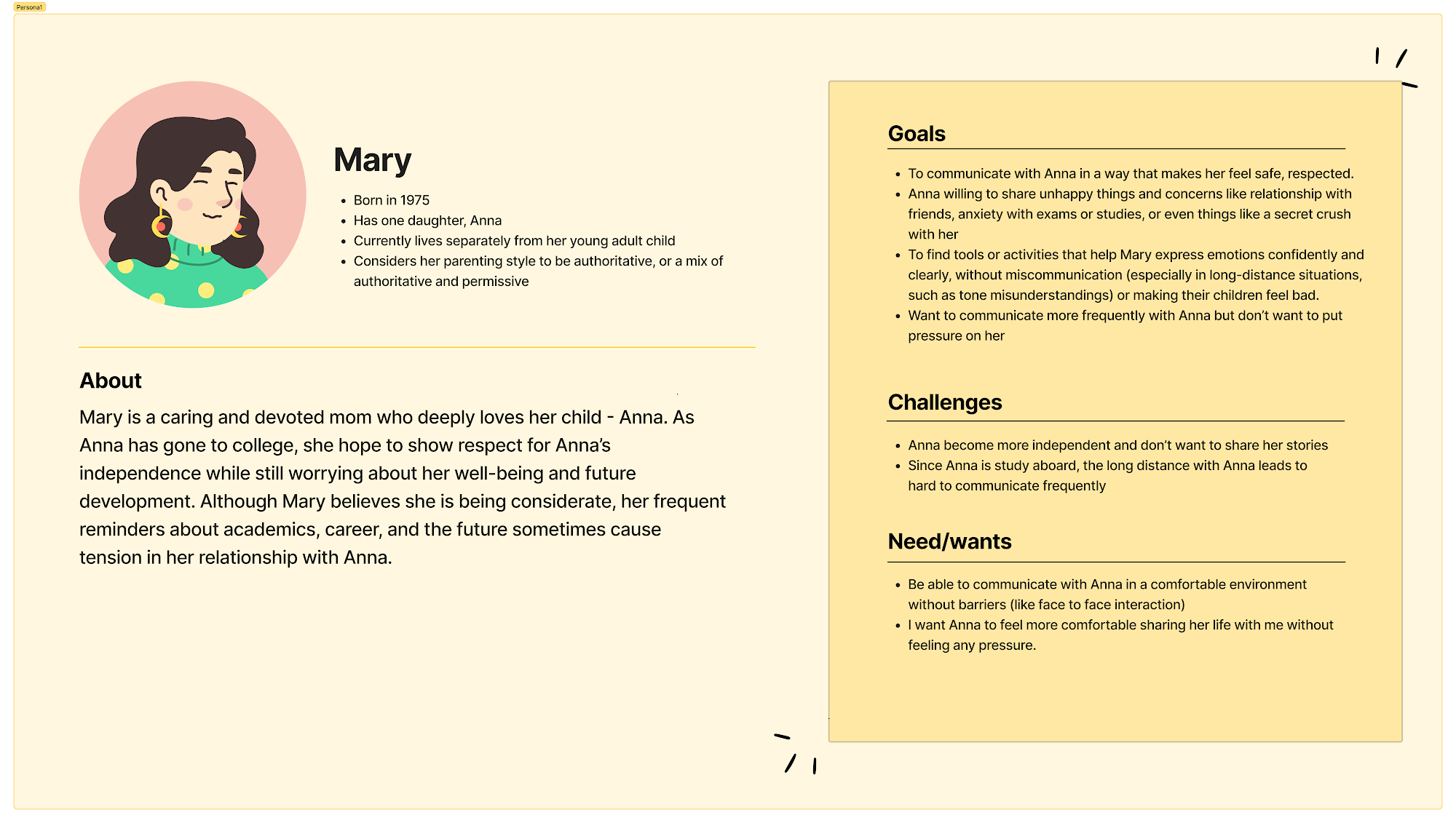
User personas derived from qualitative interviews with college students and their parents. These profiles helped guide the design direction by highlighting the specific emotional needs and communication barriers.基于对大学生及其父母的定性访谈而形成的用户画像。这些档案通过突出具体的情感需求与沟通障碍,帮助指引设计方向。
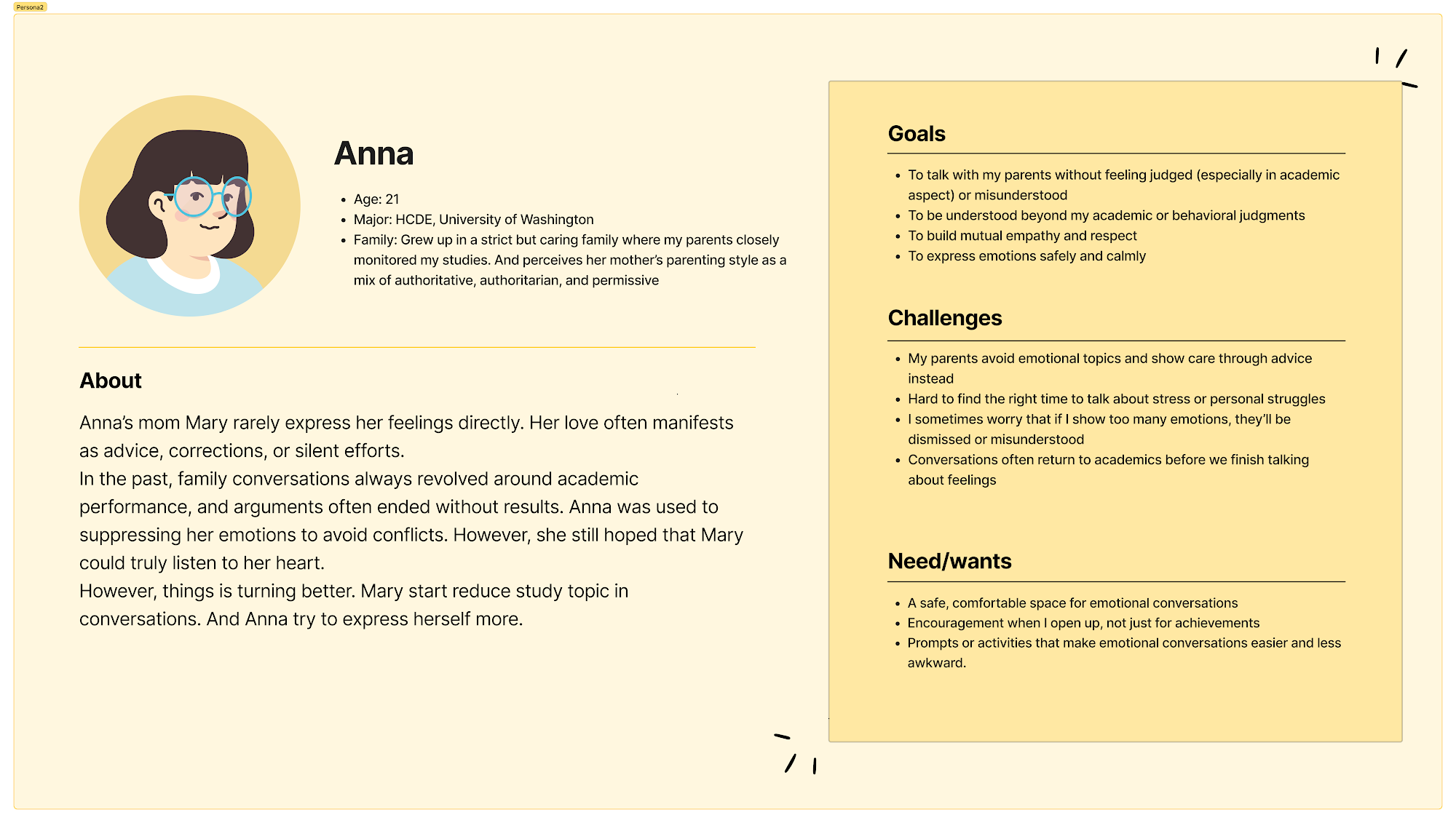
User personas derived from qualitative interviews with college students and their parents. These profiles helped guide the design direction by highlighting the specific emotional needs and communication barriers.基于对大学生及其父母的定性访谈而形成的用户画像。这些档案通过突出具体的情感需求与沟通障碍,帮助指引设计方向。
04 / Prototyping Journey原型设计历程
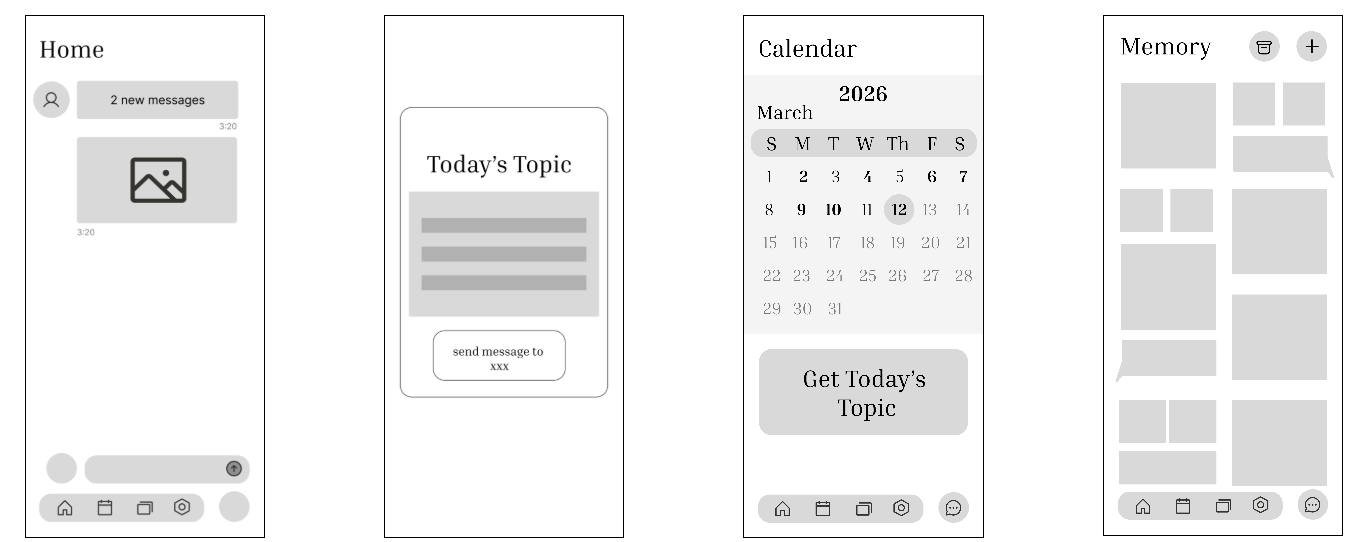
Stage 1: Low-Fidelity Exploration & Layout Mapping阶段 1:低保真探索与布局梳理
Early-stage wireframes focused on structural layout and navigation flow, establishing the foundational architecture of the communication platform.早期线框图聚焦于结构布局和导航流程,确立了沟通平台的基础架构。
Stage 2: Mid-Fidelity Interaction Design & Visual System阶段 2:中保真交互设计与视觉系统
Transitioning into higher fidelity, incorporating the visual system and testing interactive elements to refine the user experience.逐步进入更高保真度,融入视觉系统并测试交互元素,以完善用户体验。
05 / The Final Solution最终方案
The final design solution addresses the identified friction points by introducing specialized interaction models that prioritize emotional support.最终设计通过引入优先支持情感交流的专门交互模型,解决了已识别的摩擦点。
Interactive Prototype交互原型
Test the high-fidelity flow directly in this mobile simulator. It captures the transition logic and micro-interactions of the final application.直接在此移动端模拟器中体验高保真流程。它呈现了最终应用的转场逻辑和微交互。